Families bring knowledge that schools and systems need. They understand their children’s strengths, needs, cultures, histories, and daily experiences. They also see where systems are working, where barriers exist, and where change is needed.
When schools create meaningful opportunities for families to participate as partners and leaders, they build stronger trust, better communication, and more responsive learning environments.
Family leadership helps move schools from asking, “How can we get more families involved?” to asking, “How can families help shape the decisions, practices, and systems that affect children?”
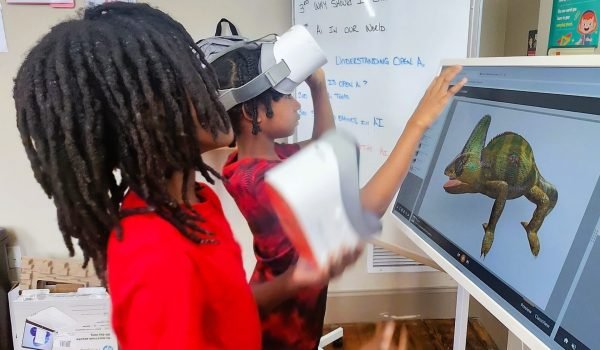
Creating access to high-quality learning, culture, literacy, technology, and enrichment that help students thrive.
Parent leader Nadia realized that her children and others in their school wanted access to learning opportunities on Spanish language and culture. She launched an after-school program for 150 children in grades K-5, coordinating 15 volunteers and leveraging her own Mexican heritage and leadership skills to benefit the entire school community.
When Jonathan’s son approached school-age, he realized how difficult it is to learn about Universal Pre-K options in his district. Partnering with RIT, Jonathan is working to build an interactive UPK app for pre-K families to allow families to compare options by location, before- and after-care hours, and to hear from other parents about their experience.
Big Island parent Shonnalee Ontiveros created Grow Kealakehe. Through mālama ʻāina and hands-on learning, this project focuses on strengthening and expanding the Kealakehe Intermediate school garden and brings students and families together to grow food, share knowledge, and deepen connections to land and community.
Improving policies, programs, and decision-making processes to better serve students and families.
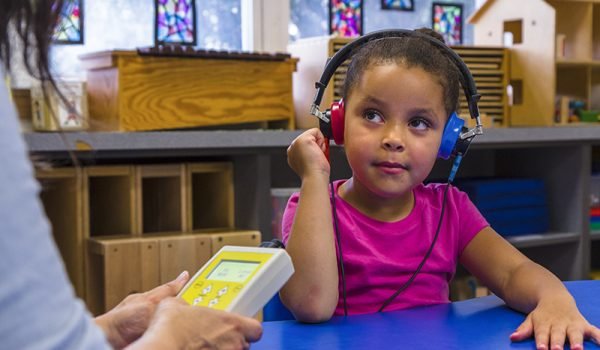
Hawaiian mom Noelle Zimdahl is collaborating and co-leading advocacy efforts to improve screening in grades K-3 and expand teacher training and coaching in literacy, increasing the supports available for teachers and children.
New Orleans PLTI parent leaders Mischell and Benita are advocating to improve the application process and system for families around school selection, highlighting areas for redesign to improve family outcomes.
In Delhi, CA, parent leader Maria noted that public library spaces for children to access computers and homework help were only open two days a week for limited hours. For children without access to technology and internet, this provided a significant challenge for their learning. She successfully advocated to keep libraries open throughout the week with expanded hours.
Helping schools become more welcoming, culturally responsive, and connected for every student.
Realizing that her school district was not yet able to implement the Since Time Immemorial: Tribal Sovereignty in Washington State curriculum, Brenda successfully advocated for professional development for the Edmonds School District staff on teaching this important culturally responsive curriculum.
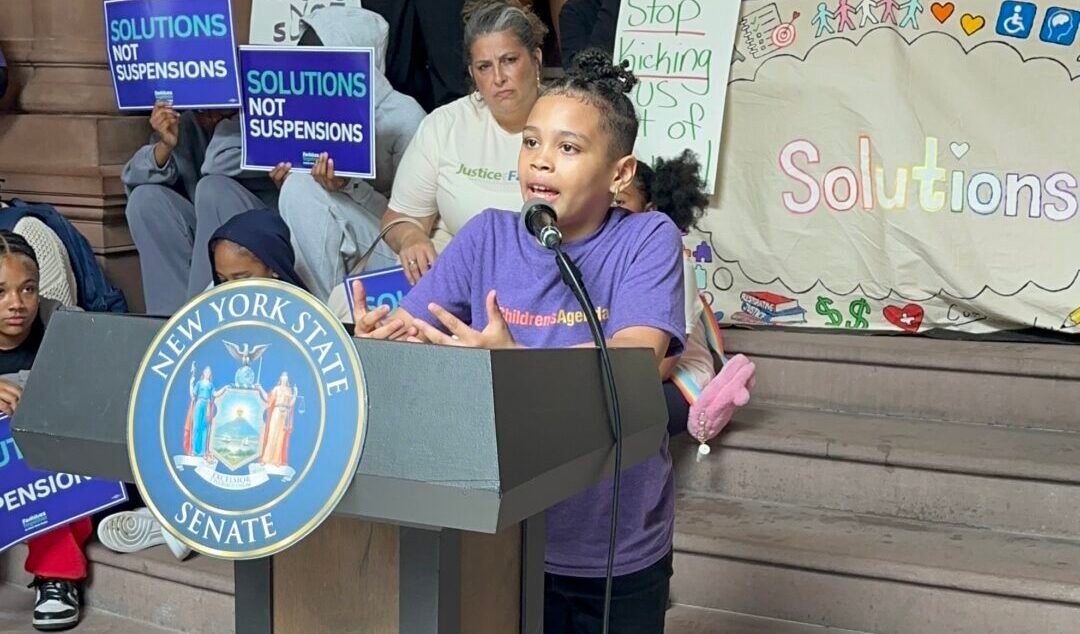
After white supremacist flyers were dropped in his community, Manish and other parent leaders launched CURB- Community Uprooting Racism in Brighton. CURB resulted in the establishment of an Inclusion, Diversity, Equity board in the town and partnering with the school district to launch data inquiries around discipline across racial subgroups and cultural responsiveness considerations for curriculum revisions.
The Parent Teacher Association (PTA) at Tamara Barnes’s sons’ high school had been dormant for years. Following PLTI, Tamara recognized the value of her voice and worked to bring back PTAs at her sons’ schools. Through her persistence and advocacy, the high school re-established its PTA, and the middle school elected Tamara as treasurer. Despite challenges, Tamara’s dedication has helped lay the groundwork for greater parent involvement and community engagement.
Identifying gaps and creating tools, supports, and resources so every student can learn and succeed.
Wanda, a parent leader in Bridgeport, launched a community project to provide basic classroom materials. With recent school closures and students learning remotely, she realized that students with special needs did not have the necessary resources. She started a special education initiative to get laptops to children with special needs so that they can get the needed supports for distance learning.
Latrice Carmichael saw a need for improvement in her school’s IEP process after years of navigating it for her son. Utilizing her experiences navigating the system, she created tools that explain Individualized Education Programs (IEPs), which are documents developed for each public school child who is eligible for special education services to help parents navigate the system to meet the “special needs” of their child with an IEP.
Oscar, a youth leader in Merced County, noticed a lack of tutoring services for ESL students, which was impacting their academic performance. He advocated and worked with the school district to help expand tutoring services, increasing the number of students supported, and improving their outcomes.
The National Parent Leadership Institute works with communities across the country to build the leadership skills of parents and caregivers so they can participate in civic life and help shape the systems that affect children and families.
In education, this means helping schools, organizations, initiatives, and communities move beyond surface-level participation toward deeper family leadership and shared decision-making. Two of the primary ways NPLI supports this work are through the Parent Leadership Training Institute (PLTI) and the Children’s Leadership Training Institute (CLTI), which together offer a two-generation approach to civic learning and leadership development.
Through PLTI and CLTI, families build the knowledge, confidence, relationships, and practical skills needed to lead change in their communities. NPLI also supports partners in creating the structures and practices that allow family leadership to take root, from stronger school-family communication to more inclusive decision-making and systems change.
The National Parent Leadership Institute (NPLI) is an anti-racist, non-profit, nonpartisan, parent-informed democracy initiative. We embrace asset-based learning that works across diverse backgrounds, races, genders, religions, ages, sexual orientations, and other factors to increase the civic leadership of parents and family members and improve outcomes for children and families.